





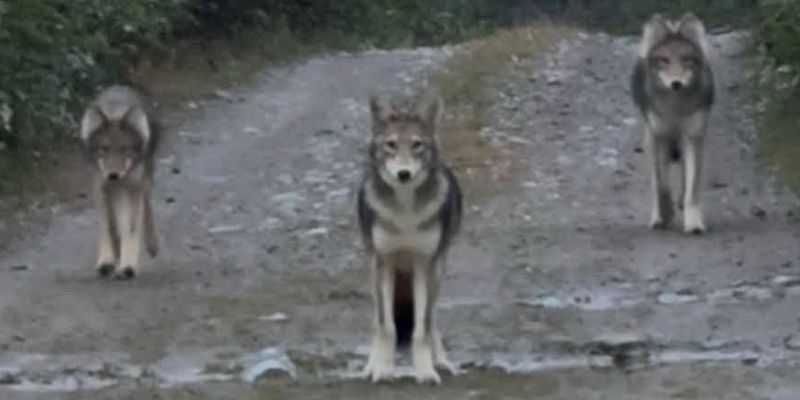
Recent pictures and video taken in the Goose Arm area on the province’s west coast have fueled speculation about the continued infiltration of wolves onto the island from Labrador.
The Department of Forestry says the first cases of Labrador gray wolves on the island were officially documented in 2008 and 2012.
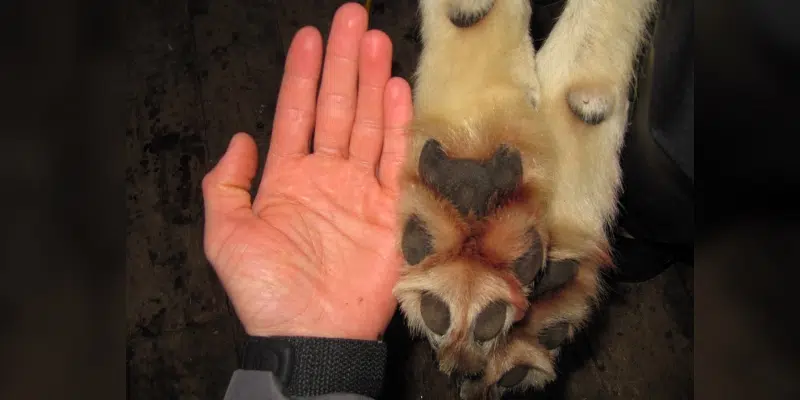
(Joe Flemming shows the size of a wolf paw after it was shot in Bonavista in 2012.)
The province’s wildlife division has collected genetic information from about 500 carcasses since 2013, with four on the island confirmed to be Labrador wolves and five identified as coyote-dog hybrids.
The department also detected evidence of some wolf DNA in 28 animals, although it’s difficult to say when the interbreeding occurred.
The department says based on available information, the wolf population on the island is likely small and while evidence suggests that wolves on the island have interbred with coyotes, the wolf genetics are likely to remain diluted because of the island’s large coyote population.
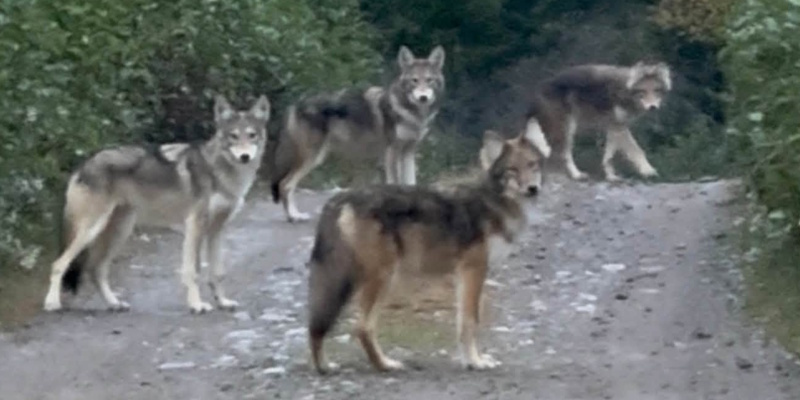
Four animals captured on camera by Nikita Compton near Goose Arm in Moose Management Area 5 (Nikita Compton)
In the meantime, coyote pups can stay with their parents for more than a year, and reports of “packs” of coyotes in Newfoundland are likely to be family groups. Wolf packs are far more complex – consisting of several generations staying together for life and hunting and defending territory as a single unit.
The department says it is working on increasing the number of samples taken in Labrador to improve their understanding of wolf genetics. Hunters are encourage to contact Wildlife on how to submit carcasses.
According to the department:
Coyotes and wolves are rarely aggressive towards humans. Aggressive interactions typically only occur if the animal(s) have been habituated to humans; never attempt to feed or habituate any wild animal.
Anyone who encounters a wild canid should:
- Stay calm and do not run
- Leave an escape route for the animal(s)
- DO NOT attempt to feed or touch the animal(s)
- If the animal comes closer, make noise (e.g., yelling, clapping) and wave your arms to appear big
- If the animal does not leave, continue to make noise while slowly backing away


